Gravel Tire Inserts: Are They Actually Worth $50?
Standard equipment at 2026 gravel races. The question isn't whether they work — it's whether they work for your specific riding.
Related: Gravel Tubeless Setup Guide • Hookless vs Hooked Wheels Safety Guide
Tire inserts were an MTB thing for years — too heavy, too hard to install, and unnecessary on hardpack gravel. That narrative has flipped. In 2026, inserts are standard equipment for serious gravel racers and bikepacking riders. Here's what changed, and whether you actually need them.
What Inserts Actually Do
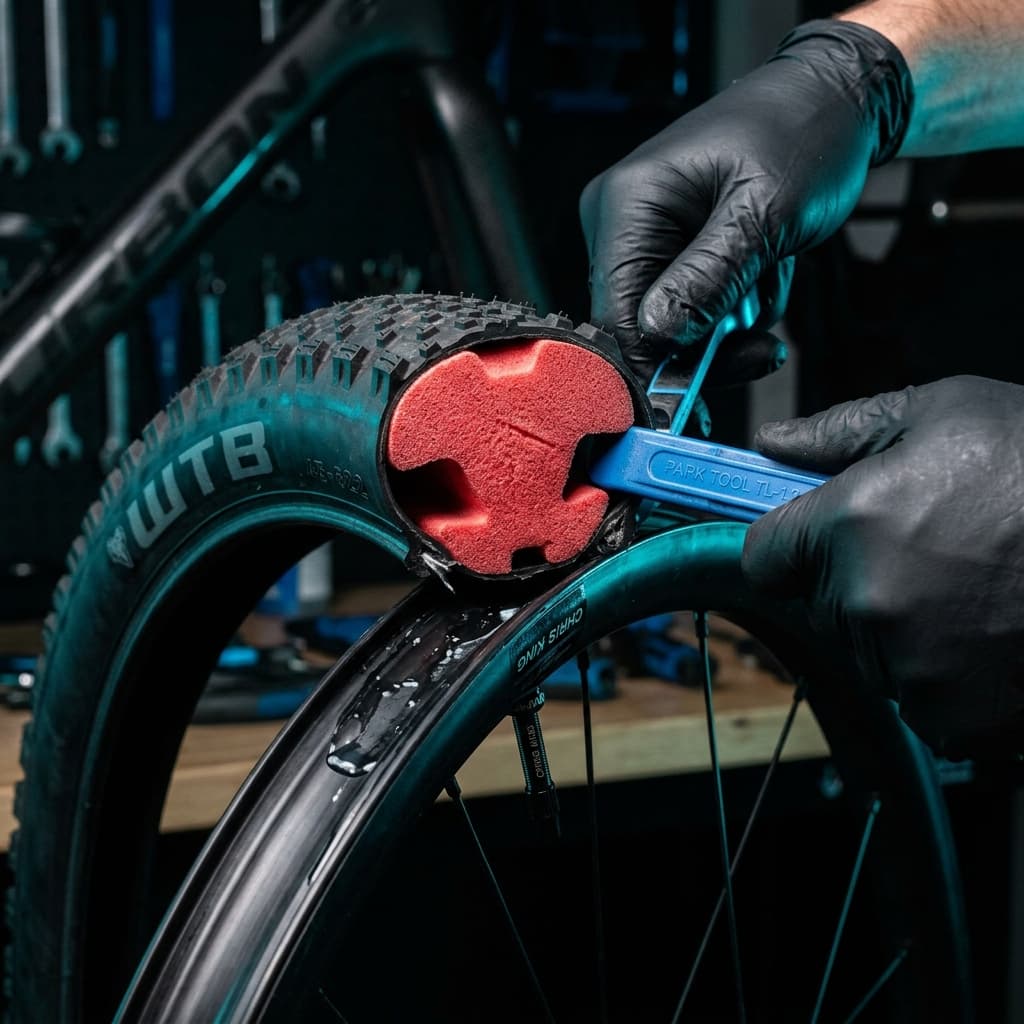
Tire inserts are foam rings (polyurethane, EVA foam, or open-cell variants) that sit inside the tire cavity, between the rim and the inner tread. They provide three benefits specifically relevant to gravel:
Burp Prevention
Fills cavity enough to maintain bead seat pressure during hard cornering and impacts. Riders run 2-3 PSI lower without burp risk.
Run-Flat Ability
After a sealant-resistant puncture, ride out on the foam insert rather than on the rim. 3-5 miles at reduced speed is realistic.
Pinch Flat Protection
Prevents tire carcass from bottoming against the rim on square-edged hits. Especially valuable on rock-strewn terrain.
The Weight Reality
Inserts add rotational weight — the worst kind for climbing. Real numbers for common gravel inserts:
Per-insert weight. Pair = 2×. Most riders run inserts front and rear for full benefit.
Are They Worth It For You?
Racing on rocky, technical terrain (Crusher in Tushar, SBT GRVL)
Yes — burp prevention + run-flat ability are race-defining
Bikepacking remote routes where a flat could strand you
Yes — run-flat capability is invaluable far from support
Hookless rims where you push close to minimum pressure
Yes — inserts dramatically reduce hookless burp risk
Racing on Midwest packed gravel (flat, less rocky)
Maybe — burp prevention less critical, weight penalty matters more
Recreational rides with easy trail access and spare tube backup
Probably not — conventional tubeless sealant is enough
The bottom line: if you race or ride technical terrain on tubeless, inserts are worth the $50 per pair and the 150-300g weight hit. If you mostly ride smooth packed gravel recreationally, invest that $50 in better sealant and save the weight for climbing.